Exploring a range of bike computers can help cyclists improve training, navigation, and route planning. The following hand-picked options cover premium GPS devices from Garmin, Wahoo, COROS, and reliable mid-range models from iGPSPORT and CYCPLUS. Each entry highlights core features, battery life, and smart benefits to help you choose the best match for your riding style and gear setup.
| Product | Brand | Key Benefit | Battery Life Highlight |
|---|---|---|---|
| Garmin Edge 540 | Garmin | Advanced navigation and adaptive coaching | Up to 26 hours (normal) |
| Garmin Edge 1050 | Garmin | Premium color touchscreen with training features | Up to 60 hours (battery saver) |
| iGPSPORT BSC300T | iGPSPORT | Touchscreen with offline navigation | Long battery life on multi-sport rides |
| COROS DURA | COROS | Solar charging with 120-hour GPS life | Solar-assisted extended use |
| Wahoo ELEMNT BOLT | Wahoo Fitness | On-device navigation with fast routing | Long battery life for rides |
Garmin Edge 540: Compact GPS With Adaptive Coaching

The Garmin Edge 540 is a compact GPS cycling computer designed for riders who value precise navigation and performance insights. Button controls simplify operation while riding, reducing screen interaction. The device supports targeted adaptive coaching that adjusts workouts based on training load and recovery, synchronized with compatible power meters and heart rate monitors. Expect strong battery life for demanding rides, with up to 26 hours in typical use and up to 42 hours in battery saver mode. Daily suggested workouts appear on-screen, helping riders stay on track without carrying extra devices.
Garmin Edge 1050: Premium Navigation And Training

The Edge 1050 offers a vivid color touchscreen, built-in speaker, and advanced training features that go beyond basic routing. This premium model emphasizes planning and performance tracking for serious cyclists who want robust data on the go. Battery life ranges up to 20 hours under demanding use, with an impressive 60 hours possible in battery saver mode. Road hazard alerts can be shared or reported by riders, contributing to safer group rides and better route accuracy when paired with a compatible smartphone. This device suits riders who need comprehensive analytics in one compact unit.
iGPSPORT BSC300T: Touchscreen GPS With Offline Maps
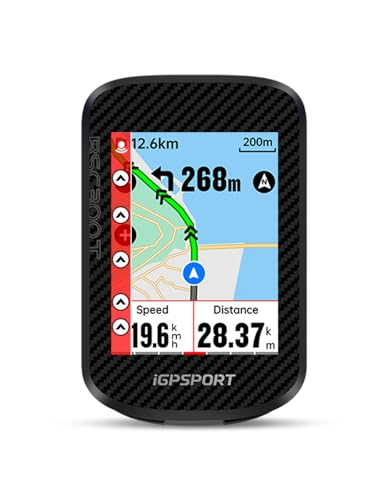
The iGPSPORT BSC300T is a wireless bike computer featuring a 2.4-inch touchscreen and six physical buttons, offering flexible control while riding. It supports multiple modes suitable for road, mountain, and electric bikes, and can display power levels when paired with compatible sensors. Global GPS coverage (GPS, Beidou, GLONASS, Galileo, QZSS) ensures fast positioning and accurate data in diverse environments. The device emphasizes ease of use with responsive touch controls and a clear route display, making it a dependable option for riders who want straightforward navigation on a budget.
COROS DURA Solar GPS: Solar-Powered Navigation

The COROS DURA is built for endurance with best-in-class battery life, offering up to 120 hours of GPS use per charge. Solar charging provides an additional endurance boost, enabling longer rides and multi-day trips in favorable sunlight. The 2.7-inch MIP color touchscreen supports fast data syncing and turn-by-turn navigation, while dual-frequency GPS helps improve accuracy in challenging conditions. The device is designed for riders who prioritize long-run capability, rugged performance, and reliable data sync with Strava and other platforms.
Wahoo ELEMNT Bolt V3: On-Device Navigation

The ELEMNT Bolt V3 focuses on streamlined navigation with clear turn-by-turn prompts. It supports routing from GPX, TCX, and popular third-party services like Strava and Komoot. On-device navigation is complemented by automatic route downloads and workout uploads when synced with compatible accounts, ensuring your training data stays synchronized across platforms. Its compact form and LED indicators make it a practical choice for riders who prefer quick access to routes and performance metrics during rides.
Wahoo ELEMNT ROAM V3: Dual-Band GPS And Sharing

The ELEMNT ROAM V3 adds dual-band GPS for improved accuracy in challenging environments. It enhances routing with turn-by-turn prompts for GPX, TCX, and other formats, and supports route sharing so nearby riders can view and load the same route. The unit enables on-demand route generation by selecting a destination on the map within the companion app, then syncing it to the device. This model is ideal for riders who value robust mapping, reliable navigation, and easy collaboration on routes with teammates or training groups.
CYCPLUS GPS Bike Computer: Easy Data And Long Battery

The CYCPLUS GPS Bike Computer emphasizes a balance of data and practicality with dynamic GPS positioning, backlit display, and a sizable 1200 mAh battery rated for extended use. The device includes automatic backlight adjustment for day and night riding, a waterproof design, and reliable data tracking such as ride time and distance. The interface is designed for glove-friendly operation and consistent readability in varying weather conditions, making it a sensible pick for riders who want solid essential metrics without extra frills.
Buying Guide: What To Consider When Choosing A Bike Computer
- Navigation and maps: Decide whether you want simply turn-by-turn prompts or full offline mapping with route planning and sharing capabilities. Dual-band GPS improves accuracy in dense forests or urban canyons.
- Battery life and charging: Evaluate how long you ride in a typical week and whether battery saver modes or solar charging are important for your use case.
- Display type and readability: Color touchscreens are convenient, but button-controlled units can be safer on bumpy roads. Consider glove compatibility and screen brightness for all lighting conditions.
- Sensor compatibility: Ensure compatibility with power meters, heart rate monitors, cadence sensors, and speed sensors you already own. This affects training data quality and coaching.
- Training features: Look for adaptive coaching, training prompts, and integration with apps like Strava or TrainingPeaks for structured workouts and performance insights.
- Connectivity and ecosystem: Some devices offer better integration with smartphone apps, route sharing, and cloud backups. Evaluate how they fit your preferred platforms.
- Durability and weather resistance: A rugged, IP-rated unit helps withstand rain, mud, and rough handling on tough rides.
- Size and weight: If you value a discreet setup, consider the device’s physical footprint and how it sits on your handlebars.
- Price to value: Higher-end models pack more features, but mid-range units often provide essential navigation and training tools at a lower cost. Choose based on your actual needs.
Across these selections, riders gain reliable navigation, performance tracking, and route-sharing options. When choosing, align features with your ride style—as a triathlete, daily commuter, or weekend explorer. The right bike computer improves training visibility, helps with route planning, and enhances safety through road hazard or turn prompts. Each option above offers a distinct balance of screen quality, battery longevity, and ecosystem compatibility while keeping the primary focus on accurate data and dependable navigation for American cyclists.