Discover top virtual cycling trainers that pair with Zwift and other apps for immersive indoor riding. This guide highlights five reliable options, balancing power accuracy, quiet operation, and ease of use to suit different spaces and training goals.
| Product | Brand | Key Benefit |
|---|---|---|
| Saris M2 Smart Indoor Bike Trainer | Saris | Wheel-on setup with strong accuracy and consistent resistance |
| Saris Fluid2 Indoor Bike Trainer | Saris | Road-like ride feel with quiet operation |
| CYCPLUS R200 Smart Trainer | CYCPLUS | High power output and uphill/downhill simulation |
| ThinkRider X2Max Smart Trainer | ThinkRider | 18% incline simulation with dual connectivity |
| Saris Magnetic Indoor Trainer | Saris | Quiet magnetic resistance with multiple levels |
Saris M2 Smart Indoor Bike Trainer

The Saris M2 is a wheel-on smart trainer that preserves the convenience of not removing the rear wheel. It supports Zwift app integration for virtual rides and features a noise level around 69 decibels at 20 mph. Its +/- 5% power accuracy provides a reliable training stimulus, and the electromagnetic resistance ensures a controlled and consistent workout each session. This trainer is suited for riders who want a straightforward setup with accurate data and dependable performance for daily intervals.
Saris Fluid2 Indoor Bike Trainer
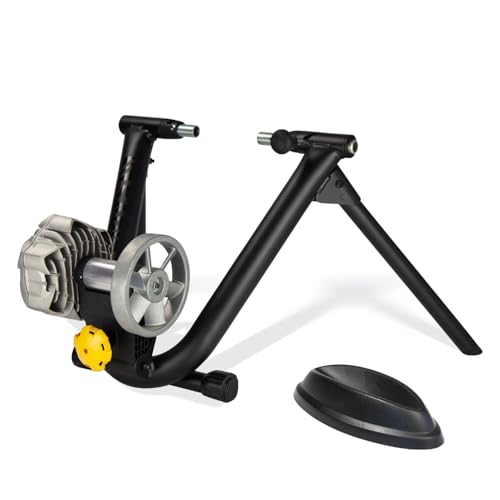
The Saris Fluid2 delivers a realistic road-like ride with progressively increasing resistance that mirrors outdoor climbs. Its large precision-balanced flywheel and patented design keep noise low, providing a smooth, whisper-quiet indoor experience. Setup is straightforward with a classic foldable frame and a wheel-on installation, enabling fast assembly and compact storage after workouts.
CYCPLUS R200 Smart Indoor Bike Trainer
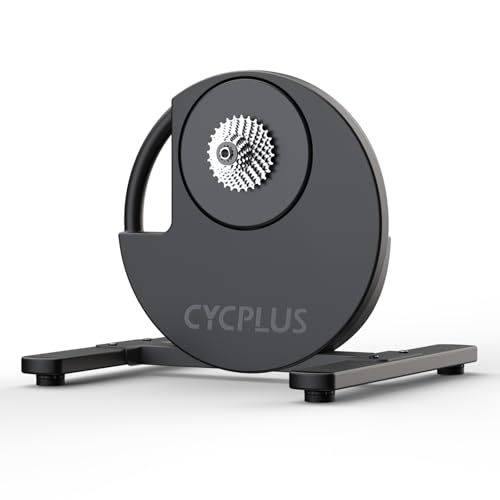
The CYCPLUS R200 features a brushless motor delivering up to 2200W peak power and 80 N·m max torque, with power meter accuracy within ±1%. It supports dual-mode BLE/ANT+ for app integration, and its intelligent uphill/downhill simulation reaches 19% incline, aligning resistance with virtual terrain. This trainer is ideal for riders seeking serious power data and realistic gradients in a compact form.
ThinkRider X2Max Smart Trainer

The ThinkRider X2Max combines BLE and ANT+ compatibility with a strong power meter capable of up to 2000W and power accuracy around ±2%. It offers intelligent 18% slope resistance, which automatically matches the tilt in riding software to mimic real-map terrain, enhancing realism during virtual rides. This trainer suits riders who value immersive gradient training and reliable app support.
Saris Magnetic Indoor Bike Trainer

The Saris Magnetic trainer provides a smooth, quiet ride with a frictionless magnetic resistance unit. It offers five resistance levels to vary intensity and is compatible with Zwift and other indoor cycling apps. This option appeals to riders who want a simple, quiet setup with consistent performance across workouts and easy app integration for virtual riding.
Saris Magnetic Plus Indoor Bike Trainer

The Magnetic Plus model uses a quiet fluid-like feel with linear resistance that intensifies with each pedal stroke. It connects smoothly to Zwift and similar apps, expanding interactive training options while maintaining a stable, quiet ride. Its wheel-on setup mirrors real-world cycling usability for everyday training routines.
Buying Guide: Key Purchase Considerations For Virtual Cycling Trainers
- Resistance Type and Realism: Magnetic, fluid, and direct-drive systems offer different levels of noise, feel, and road-like resistance. Fluid and magnetic units tend to be quieter, while direct-drive often provides higher power accuracy and more precise climbing simulations.
- Power Accuracy and Range: Look for a trainer with power accuracy within ±1% to ±2% for precise training zones. A higher peak resistance benefits sprint workouts and steep climbs in virtual apps.
- Connectivity: Ensure dual-mode BLE/ANT+ compatibility if you plan to use Zwift or other apps. Check that your smartphone, tablet, or computer supports the trainer’s connectivity requirements.
- Noise Level: Consider where you’ll train. Apartments or shared spaces benefit from models advertised as whisper-quiet or under a certain decibel level at typical speeds.
- Ease of Setup and Transport: Wheel-on trainers are quick to set up, while direct-drive units may require more adjustments but offer cleaner power data. Foldable frames aid in storage for smaller spaces.
- App Ecosystem and Virtual Terrain: Some trainers come preconfigured with virtual shifting, incline simulations, or included gears. Confirm compatibility with popular apps like Zwift, TrainerRoad, MyWhoosh, and Rouvy.
- Bike Compatibility: Check axle spacing, rear dropout width, and compatibility with your bike’s drivetrain. Some trainers require adapters for different bike types.
- Maintenance And Durability: Consider drive system wear, belt life, and ease of replacement parts. Heavier use may justify investing in a trainer with robust components and strong customer support.
- Space and Storage: Measure your training area. If space is tight, prioritize foldable designs or compact direct-drive options that store vertically.
- Budget Range: Prices vary by technology and features. Balance desired realism, app support, and longevity with what you’re willing to invest upfront and for ongoing app subscriptions.