Choosing the right underwater thruster for a kayak or small watercraft involves balancing thrust, voltage, and environment. The products below represent a mix of compact brushless and brushed motors designed for saltwater or freshwater use, with depth ratings, power ranges, and compatible battery configurations. This guide highlights performance, build quality, and applicability to kayak setups so you can compare options quickly and confidently.
| Product | Brand | Voltage Range | Approx. Thrust | Environment |
|---|---|---|---|---|
| U2 Underwater Thruster 12-16V | ApisQueen | 12-16V | Up to 1.7 kgf | Seawater |
| U5 Underwater Thruster 12-24V (CW) | ApisQueen | 12-24V | Up to 7 kgf (15.4 lbs) | Freshwater |
| U5 Underwater Thruster 12-24V (CCW) | ApisQueen | 12-24V | Up to 7 kgf (15.4 lbs) | Freshwater |
| Cloudpower 12-24V 20A 300W Propulsion | Cloudpower | 12-24V | Up to 300W | Various watercraft |
| Deroanke Underwater Thruster 12V | Deroanke | 12V | Up to 288W | General underwater use |
ApisQueen U2 Underwater Thruster

The U2 brushless thruster is designed as a compact, efficient propulsion unit for kayaks, ROVs, RC boats, and underwater vehicles. Constructed with a one-piece open mold and composite materials, it emphasizes anti-corrosion and anti-oxidation performance suitable for seawater. It supports 12-16V operation (3-4S LiPo) and includes front and rear protective ribs to reduce foreign-object ingress. This model combines low power consumption with high efficiency, making it a practical choice for lightweight, high-mreactivity kayak setups.
ApisQueen U5 Underwater Thruster (CW)

The U5 is a higher-thrust option built for freshwater use, combining high-strength plastic construction with stainless steel bearings to resist rust and corrosion. It provides up to 7 kgf (approximately 15.4 lbs) of thrust and is designed for a depth rating up to 50 meters with a potted seal. A 24V LiPo battery is recommended, supporting batteries up to 29.4V (7S). Batteries are not included. This model is suitable for inflatable boats and kayaks needing stronger propulsion in calmer freshwater environments.
ApisQueen U5 Underwater Thruster (CCW)

This CCW-configured U5 shares the same robust build as the CW variant, offering strong freshwater thrust with similar depth and battery guidance. It is designed to withstand environmental exposure while delivering reliable performance in kayaks and inflatable craft. The same 24V LiPo recommendation applies, emphasizing the module’s versatility across various watercraft designs that require reversed rotation for maneuverability.
Cloudpower 12-24V 20A Underwater Thruster

This underwater propulsion unit uses a brushless motor with a 12-24V supply and a maximum 20A current draw, delivering efficient propulsion for RC boats, fishing boats, lifeboats, and ROVs. It is designed for a broad range of water conditions, emphasizing versatility and robust performance in compact form factors. The thruster’s 300KV specification supports balanced efficiency across common underwater applications, making it suitable for hobbyist and light commercial setups.
Deroanke Underwater Thruster

The Deroanke unit is a 12V brushed motor propulsion option rated at 288W, designed to power ROVs, RC boats, and underwater vehicles. It emphasizes reliability and straightforward installation for users who prefer brushed motor technology. The included reference to a practical load and maneuverability makes it suitable for entry-level underwater projects or portable propulsion on smaller craft, with attention to battery compatibility and storage considerations.
Kedean 600W Kayak Trolling Motor

Designed as a trolling motor alternative, this 600W DC24V unit focuses on compactness and efficiency. It weighs about 1.6 kg, emphasizing lightweight installation for kayak users seeking increased speed with limited added weight. The model highlights a built-in brushless motor design and an emphasis on flow optimization for faster speeds relative to traditional propeller configurations, making it a compelling option for performance-minded paddlers and light fishing setups.
ApisQueen 24V Underwater Thruster U92 Set
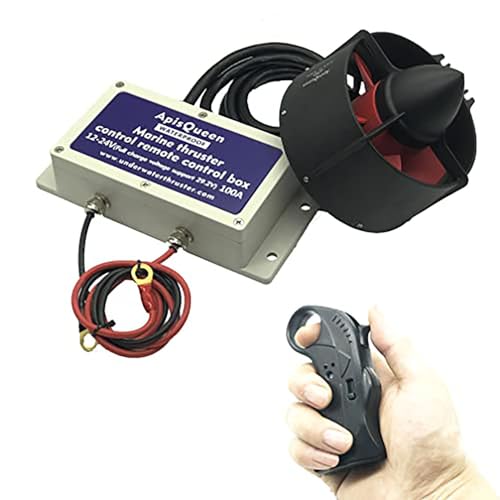
The U92 set features a 24V underwater thruster with a 1080W brushless motor and 9.2 kgf (20.3 lbs) thrust, including a waterproof remote control and built-in 100A ESC. This configuration is tailored for kayaks and inflatable boats requiring strong thrust and reliable remote operation. The ESC design prioritizes thermal management for extended operation, and the integrated waterproof remote offers convenient control from a distance during watercraft use.
Buying Guide: Key Purchase Considerations And Comparisons
- Voltage and battery compatibility: Ensure the thruster voltage matches your battery (12V, 24V, or higher). Some models support 12-16V, others 12-24V, and several require LiPo packs of specific S counts for optimal performance.
- Thrust and weight: Higher thrust benefits larger kayaks and heavier loads, but adds weight and power draw. Match thrust to your boat size, typical load, and desired top speed.
- Environment and durability: For seawater use, prioritize anti-corrosion construction, seals, and protected fasteners. Freshwater models may omit some corrosion protections but reduce cost.
- Depth rating and water ingress: Check waterproof depth ratings (often 50 meters or more) and sealing technology to prevent water intrusion during dives or deep use.
- Motor type: Brushless vs brushed motors affect efficiency, heat management, and long-term reliability. Brushless units generally offer higher efficiency and smoother operation.
- Control and integration: Remote control options, ESC stability, and compatibility with existing RC gear or autopilot setups can influence usability in kayak configurations.
- Maintenance and spare parts: Consider availability of replacement parts, propellers, seals, and batteries, which impact total ownership cost and downtime.
- Installation fit: Ensure mounting brackets, shaft length, and propeller size align with your kayak hull design and available space without compromising balance.
- Water type considerations: Freshwater and saltwater compatibility varies. If you paddle in mixed environments, prioritize versatile, corrosion-resistant designs.
- Portability and weight: For backpack-friendly setups or frequent transport, lighter units with integrated propulsion systems can be advantageous.
When selecting an underwater thruster for a kayak, assess how you plan to use the craft—recreational paddling, fishing, or light exploration—and balance thrust, efficiency, and durability. Battery availability, maintenance needs, and installation compatibility should guide the final choice to ensure reliable propulsion across typical water conditions.