Choosing the right regulator is essential for technical diving, especially in cold water, deep, or challenging environments. The following five products represent top-performing options from leading brands, with features like VAD systems, titanium barrels, environmental sealing, and robust first/second-stage configurations. This guide highlights what makes each regulator suitable for demanding dives, along with a concise buying table to help compare capabilities at a glance.
Buying at a glance
| Product | Brand | Key Feature | Best Use |
|---|---|---|---|
| Mares HR 2nd Stage Technical | Mares | Adjustable breathing comfort, VAD system | Cold water, stage/sidemount setups |
| SCUBAPRO MK25 EVO/S620 Ti | SCUBAPRO | Air-balanced first stage, titanium second stage | Extreme conditions, versatile configurations |
| Mares SXS 62X Set | Mares | Smallest second stage, AST, Auto-Sealing | Travel and minimalist setups |
| Mares 26XR-HR Set | Mares | Multi-port design, Dry Kit, DIN option | Deep/technical dives, stage configurations |
| Yuecoom First Stage Regulator | Yuecoom | Surplus gauge, precise gas control | Reliable air delivery, cave/deep dives |
Mares HR 2nd Stage Technical Cold Water Regulator

The Mares HR 2nd Stage is built for demanding underwater environments and cold water use. It supports various configurations including stage, sidemount, and backmount setups, with a focus on endurance in harsh conditions. An adjustable breathing comfort system lets divers tailor inhalation effort to personal needs and dive conditions. The Vortex Assisted Design (VAD) channel directs gas flow toward the mouthpiece, reducing breathing resistance and supporting easier inhalation. This makes it suitable for challenging technical dives where reliability and comfort matter most.
SCUBAPRO MK25 EVO/S620 Ti Diving Regulator System
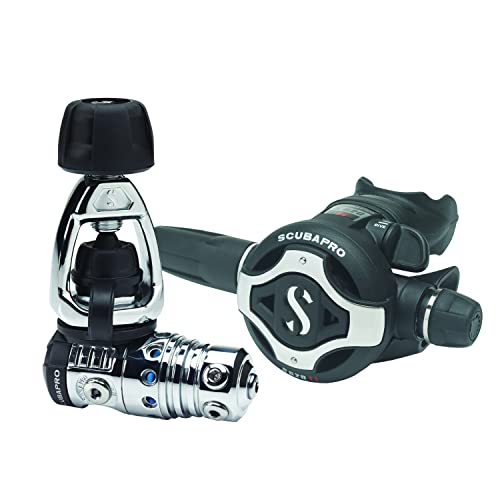
The SCUBAPRO MK25 EVO/S620 Ti system combines an air-balanced, flow-through piston first stage with a high-performance, titanium second stage. The chrome-plated brass first stage delivers smooth airflow across depth and suction variations, while thermal insulation protects inner mechanisms in cold-water conditions. The second stage is a lightweight titanium barrel with a reinforced technopolymer case and stainless steel frame for rugged use. With versatile port configurations and multiple hopping options, this setup suits a wide range of technical and mixed-gas dives.
Mares SXS 62X Scuba Diving Regulator Set
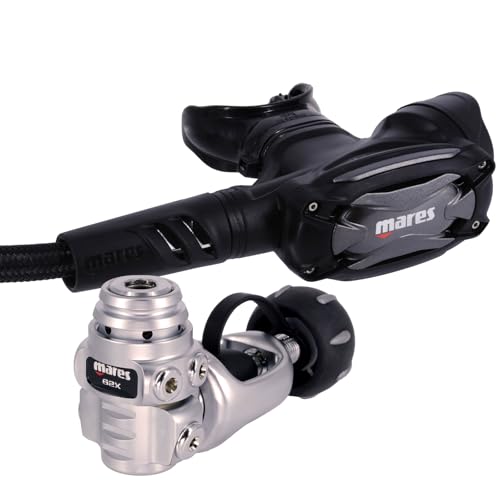
The Mares SXS 62X set emphasizes portability with the smallest and lightest second stage on the market, ideal for travel and minimalist setups. The 62X first stage features Auto-Sealing Technology (AST) to prevent water ingress, delivering dry performance in varied conditions. Dynamic Flow Control (DFC) provides pre-oriented low- and high-pressure ports for steady airflow as depth changes. This combination offers reliable performance for divers who prioritize compact gear without sacrificing breathing reliability.
Mares 26XR-HR Technical Diving Regulator Set
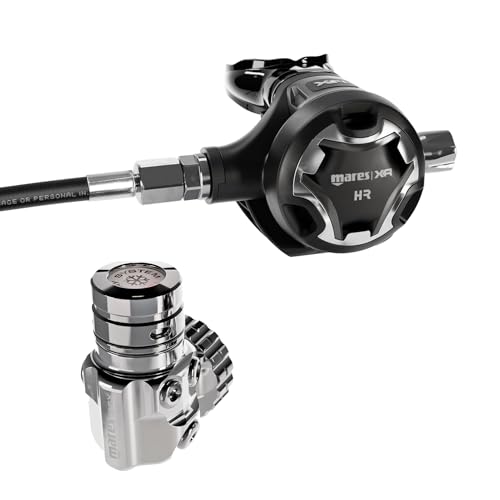
The Mares 26XR-HR set is designed for deep and technical dives, offering high flexibility with its multi-port design and a 300 BAR DIN option. The 1st stage uses Natural DFC on all LP ports and features a TBP Dry Kit for environmental sealing, ensuring reliable breathing in harsh environments. Its balanced diaphragm with Auto Sealing Technology improves performance under pressure, with a compact and lightweight package suitable for stage or backmount configurations and diverse gas mixes.
Yuecoom First Stage Scuba Regulator

The Yuecoom first-stage regulator is built from aluminum alloy for durability and reliability. It includes a surplus pressure gauge and a first-stage pressure reducing valve to ensure safe breathing performance across depths. Designed for precision gas control, it supports stable gas delivery suitable for deep, technical, or cave dives, making it a robust choice for divers who demand dependable air supply and adjustable flow characteristics.
Buying Guide
Key considerations when selecting a technical diving regulator:
- Breathing performance: Look for adjustable comfort, VAD systems, and balanced flow to reduce inhalation effort at depth.
- First vs. second stage design: For cold water and extreme dives, prioritize The combination of a robust first stage (air-balanced, diaphragm or piston) with a reliable second stage (titanium, lightweight materials, or VAD-equipped) for efficiency and durability.
- Materials and corrosion resistance: Titanium components and reinforced technopolymers resist saltwater and corrosion, extending service life in demanding environments.
- Port versatility: Generous LP/HP ports and dual configurations (upward/downward) help with hose routing, especially in sidemount or backmount setups.
- Environmental sealing and dryness: Systems with Dry Kit or AST technologies help protect internal parts from water ingress in cold or freezing conditions.
- Serviceability: Consider regulators with widely available parts and technician support, ensuring easier maintenance and calibration.
- Travel considerations: Compact or light-weight second stages and multi-port arrangements simplify packing and reduce weight for air travel.
- Safety features: Gauges, gauges with redundant readings, and clear oxygen compatibility documentation are important for technical dives.
In sum, the chosen lineup covers cold-water resilience, adjustable breathing comfort, versatile configurations, and travel-friendly designs, enabling divers to tailor equipment to specific technical profiles and dive plans while maintaining reliability across depth and environment.