Golf swing speed monitors provide objective data to help players of all levels optimize their swing, tempo, and distance. This guide highlights five top options that balance accuracy, ease of use, and value. Each product section includes key specs, typical use cases, and real-world considerations to help you choose the right tool for home practice, driving range sessions, or outdoor rounds.
Summary Table of Selected Products
| Product | Brand | Key Focus | Typical Use |
|---|---|---|---|
| PRGR HS 130-A Portable Golf Launch Monitor | PRGR | Doppler radar, ball and club data, 500 swing memory | Home practice or on the driving range (no app required) |
| Voice Caddie SC300 Portable Launch Monitor | Voice Caddie | Real-time shot data, Doppler radar, detailed parameter set | Indoor/outdoor practice with richer analytics |
| Garmin Approach R10 | Garmin | Portable launch monitor with app-based insights | Indoor practice and trackable training metrics |
| Swinora Golf Launch Monitor & Simulator | Swinora | 3D trajectory, environmental sensors, virtual practice | Indoor/outdoor simulated play and analytics |
| Swing Speed Radar (Simple Model) | Swing Speed Radar | Fast, instant swing speed readings | Quick feedback on tempo and speed |
PRGR HS 130-A Portable Golf Launch Monitor

The PRGR HS 130-A uses advanced Doppler radar to measure club head speed (with or without a ball), ball speed, smash factor, total and carry distance. It provides a compact, affordable option that records up to 500 swings in memory, making it suitable for regular practice sessions or swing-speed training. No Wi-Fi or apps are required, and the unit runs on AAA batteries for convenient use on the range or at home. The device is designed to offer close-to-high-end data quality at a fraction of the cost, helping players monitor improvements over time.
Voice Caddie SC300 Portable Launch Monitor

The SC300 combines Doppler radar with real-time shot data tracking, including swing speed, ball speed, carry/total distance, smash factor, launch angle, apex, and spin (spin values available via the My Swing Caddie app). It emphasizes accuracy with rated performance in target and practice modes and delivers actionable feedback for practice sessions at home or on the course. While it provides rich analytics, users should consider app integration and data interpretation as part of the overall experience.
Swing Speed Radar (No-Ball Mode)

This unit emphasizes simplicity and speed feedback with a focus on swing speed rather than ball impact. It measures a range from 20 mph to over 200 mph and supports no-ball practice with alternatives like wiffle balls or sponge balls. Designed for immediate feedback, it helps players gauge tempo and speed on every swing without requiring a ball, making it ideal for quick practice sessions or students focusing on mechanics over ball flight.
Garmin Approach R10
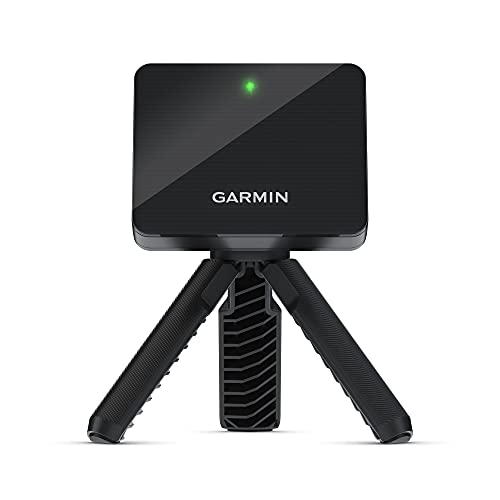
The Garmin Approach R10 is a portable launch monitor that works indoors or outdoors and integrates with the Garmin Golf app. It offers key metrics such as club head speed, ball speed, launch angle, and more, with training modes that help players identify strengths and development areas. Battery life and waterproofing add to its versatility for varied practice environments, while the app-based tracking enables long-term trend analysis and club-by-club comparisons.
Buying Guide
- Accuracy and data depth: Radar-based monitors (Doppler radar) generally deliver more reliable swing and ball metrics. Consider models that provide club head speed, ball speed, carry distance, launch angle, smash factor, and spin if you need comprehensive insights.
- Ease of use: Some devices require apps or Bluetooth connections, while others operate without electronics or Wi-Fi. Decide whether you prefer a standalone unit or a connected system with smartphone integration.
- Power and portability: Battery life and removable power sources affect where you can practice. USB-C or AA/AAA power options influence convenience for travel or range use.
- Memory and data storage: Built-in memory or app-based history helps you track progress over time. A larger swing history allows trend analysis and more meaningful coaching feedback.
- Indoor vs outdoor use: Look for environmental sensors, wind/pressure compensation, and 3D trajectory visualization if you train in varied conditions.
- Price-to-value balance: Compare data depth, the presence of a companion app, and how often you practice. Higher upfront cost may be justified by long-term analytics and durability.
- Platform compatibility: If you already use a specific golf app or ecosystem, ensure the monitor integrates smoothly with your preferred platform (e.g., Garmin Golf, My Swing Caddie, or third-party apps).
- Ball-free options: Some models offer no-ball modes, useful for tempo work or early-stage swing changes without a ball in play.
When choosing, consider your primary use case: casual practice at home, data-driven coaching at the range, or comprehensive swing analysis across multiple clubs. Reading reviews about reliability, customer support, and firmware updates can also help identify models that maintain performance over time.