When fishing in streams and rivers, a sinking tip fly line can dramatically improve lure depth and control. This guide highlights five top choices designed for trout, steelhead, and other sport fish in moving water. Each option blends a sinking front with a floating section, allowing precise presentation of wet flies, streamers, and nymphs. Below you’ll find brief overviews, key features, and buying considerations to help you pick the right sinking-tip line for your rod and fishing style.
| Product | Weight Forward (WF) / Type | |||
|---|---|---|---|---|
| M MAXIMUMCATCH Maxcatch Sinking Tip Fly Line (Royal Blue/Black) | MAXIMUMCATCH | WF-5F/S | 3-4 IPS sinking tip | 100 ft total |
| M MAXIMUMCATCH Maxcatch Sinking Tip Fly Line (Lemon Green/Black) | MAXIMUMCATCH | WF-8F/S | 3-4 IPS sinking tip | 100 ft total |
| RIO Avid Series 24FT Sinking Tip (Freshwater Trout) | RIO | Varies by line weight | 24 ft sinking tip | ~100 ft total |
| Aventik Sinking Tip Fly Line (Black/Moss Green) | AVENTIK EUPHENG | 4F/S | 5-6 IPS sinking tip | 100 ft total |
| Scientific Anglers WF-5-S Type LLL Frequency Sink Tip | Scientific Anglers | WF-5-S | 10 ft fast sink tip | 85 ft tip + 50+ ft running line |
Note: All products are designed to optimize control in moving water and work well with streamers and wet flies. Consider your rod weight, water clarity, and typical fishing depth when comparing sinking-tip performance.
Maxcatch Sinking Tip Fly Line – Royal Blue
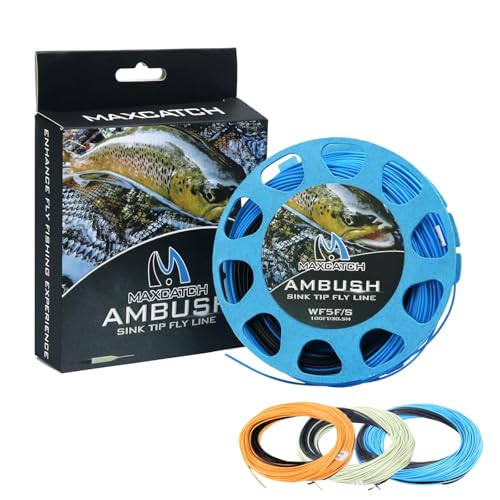
The Maxcatch sinking-tip line is designed for streamers and wet lures in moving water. It combines a 15-foot sinking tip with the remaining 85 feet floating, delivering a 3-4 IPS sinking rate for the tip. The line promotes fast, accurate deliveries to the target depth and is useful for trout, steelhead, and salmon in current. The combination of a sinking front and floating running line aids quick positioning and controlled casts in flowing water.
Maxcatch Sinking Tip Fly Line – Lemon Green
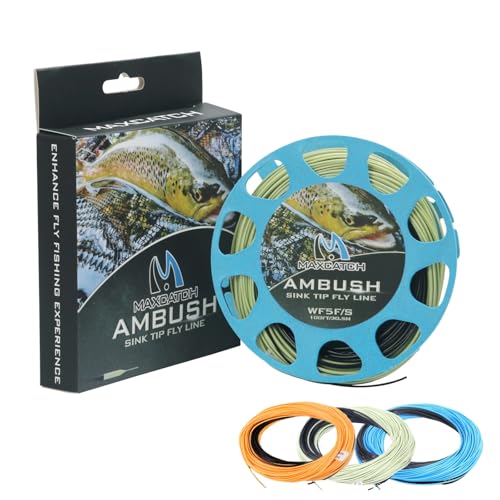
The Lemon Green version shares the same sinking-tip design as the Royal Blue variant, with a 15-foot sinking tip that transitions to 85 feet of floating line. It is offered in a WF-8F/S configuration, providing versatility for heavier setups and longer casts in moderate current. Anglers can present heavier streamers and medium-sized wet flies through the water column with improved depth control and line stability.
RIO Avid 24FT Sinking Tip
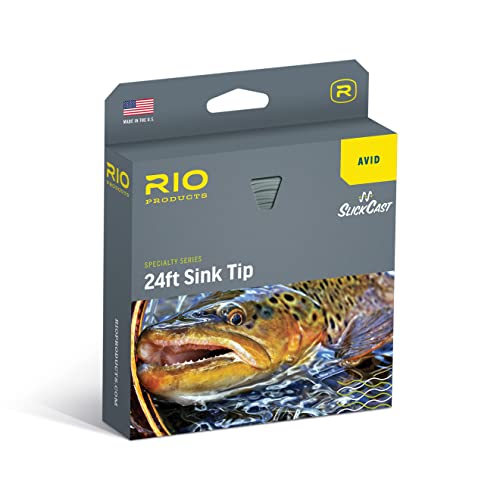
RIO Avid sinking-tip lines feature a 24-foot sinking tip designed for easy casting performance with slightly heavier and shorter heads. Built on a supple memory-free core with a slick coating, they offer smooth distance and reliable depth control. These lines are matched to specific grain weights to align with particular rod sizes, making it easier to choose the correct setup for 5- to 8-weight rods and sustaining confident casting in moving water.
Aventik Sinking Tip Fly Line
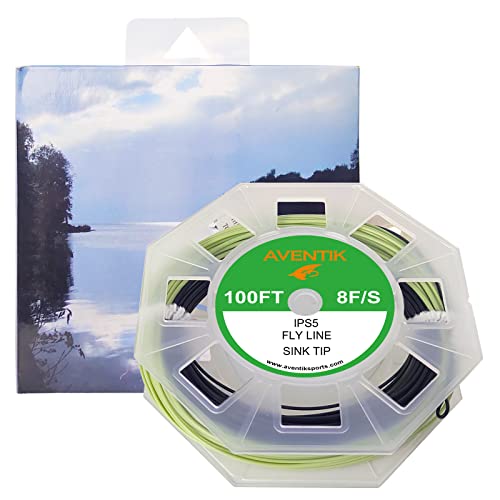
Aventik’s sinking tip line uses PVC coating on a braided core for durability and a balanced casting feel. The line features a 15-foot sinking tip and 85 feet of floating running line, with an IPS range of 5-6. A welded loop on the front end simplifies rigging, minimizes knot failures, and helps anglers quickly attach leaders. It’s designed to reduce “kick” and improve line control in fast currents where accuracy matters most.
Scientific Anglers WF-5-S Type LLL Frequency Sink Tip
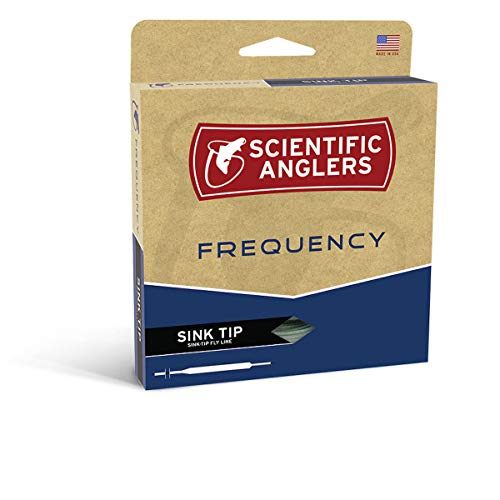
Scientific Anglers’ Frequency Sink Tip line is designed for streamers and wet flies targeting trout, steelhead, and other species in moving water. The 10-foot fast sink tip efficiently takes flies through the water column, while a mid-length head provides control for accurate presentations. This line is known for its durable coating and consistent performance across water conditions, aiding reliable depth management in moderate to strong currents.
Buying Guide
- Line taper and tip length: Longer sinking tips offer deeper presentation but can reduce casting ease. Shorter sink tips can improve turnover for tight quarters.
- Sinking rate consistency: IPS values indicate depth speed. For technical nymphing and streamer work, a 3-6 IPS tip generally covers a broad range of water columns.
- Running line feel: A high-quality floating running line reduces drag and improves distance. Memory-free cores help maintain line shape when mending and loading.
- Core construction: Braided or memory-free cores typically provide smooth casting and better knot strength under load. Consider the line’s durability for rugged environments.
- Weight and rod compatibility: Match grain weight recommendations to your rod. A properly matched line improves casting efficiency and overall control in current.
- Coating and slickness: Coatings that offer low friction enhance distance and reduce line drag when pulling through the water. This can be important in windy conditions.
- Rigging convenience: Welded loops and easy knot access at the tips simplify setup and quick changes between sessions or patterns.
- Durability versus cost: More durable lines may incur higher upfront costs but can save money over time through reduced wear in demanding waters.
In moving water, the right sinking-tip line combines depth control with casting reliability. Consider the typical water height, current strength, and target species when selecting among these five options. Always align your rod weight and line weight with the recommended grain weight ranges for best results.