When upgrading a car’s audio system, mid range drivers play a crucial role in delivering clear vocals and balanced instruments without the cost or complexity of premium components. This guide highlights five solid mid range driver options that balance performance, efficiency, and install ease for most budget-conscious enthusiasts. Each option includes key specs to help you compare how they fit with factory head units, amplifiers, and vehicle wiring.
Below is a quick summary of the chosen products, with essential specs to help you decide which mid range driver fits your setup.
| Product | Brand | Impedance | Power (RMS) | Frequency Range | Notable Feature |
|---|---|---|---|---|---|
| Pyle 5″ Midrange Car Door Speaker | Pyle | 8 Ohm | 100 W | 450 Hz – 7 kHz | High efficiency, quick install with included grille |
| Goldwood GM-85/8 5″ Midrange | Goldwood Sound | 8 Ohm | 60 W RMS | 500 Hz – 15 kHz | Poly mica cone, USA designed |
| PRV AUDIO 6MR200A-4 Midrange Pair | PRV AUDIO | 4 Ohm | 200 W | Designed for efficiency in compact depth | Kevlar-loaded paper cone, vented pole piece |
| Dayton Audio PC83-4 3″ Full-Range Driver | Dayton Audio | 4 Ohm | — | — | True full-range response, compact design |
| DS18 PRO-HY6.4B 6.5″ Hybrid Mid-Range | DS18 | 4 Ohm | 225 W RMS / 450 W max | Hybrid 6.5″ midrange with 1″ VC | Built-in compression driver horn for extended highs |
Pyle 5″ Midrange Car Door Speaker

The Pyle PDMR5 midrange speaker is designed to upgrade factory car speakers with an emphasis on efficient performance. With a frequency response of 450 Hz to 7 kHz, it centers on vocal clarity and midrange detail, making it a strong option for daily driving or casual listening. Its 8-ohm impedance ensures compatibility with most stock head units and wiring, reducing the need for complex rewiring. The speaker handles up to 200 watts peak power (100 watts RMS) and uses a 15-ounce magnet for solid bass presence within its midrange range, minimizing distortion at moderate volumes. A compact footprint and included mounting hardware simplify installation for a cleaner upgrade in many vehicle doors. A custom grille is included to protect the diaphragm and maintain a factory-like appearance.
Pros: Good efficiency, clear vocal reproduction, easy wiring with 8-ohm compatibility. Cons: Limited low-end compared to dedicated subwoofers, needs a capable amplifier for higher SPLs.
Goldwood GM-85/8 5″ Midrange
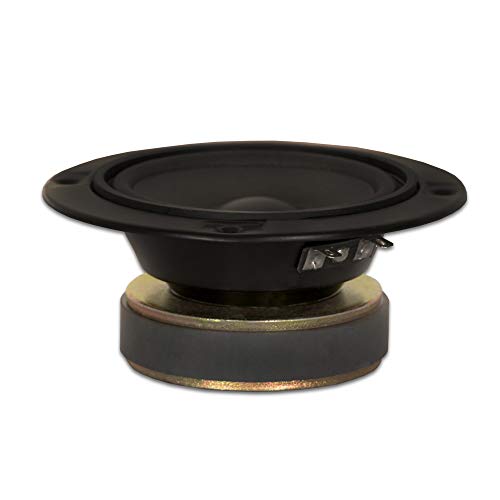
The Goldwood GM-85/8 midrange is a simple, budget-friendly option designed for compact enclosures and factory replacements. With an 8-ohm impedance and a power rating of 60 W RMS (120 W max), it handles midrange duties effectively in many factory audio upgrades. The 500 Hz to 15 kHz range supports smooth vocal and instrument detail, aided by a 1″ aluminum voice coil and a poly mica cone. The speaker’s closed back and stamped steel frame contribute to a durable, steady performance in standard automotive environments. It’s a solid choice for those seeking a straightforward upgrade without specialized mounting requirements.
Pros: Affordable, durable construction, easy installation. Cons: Moderate power handling, may require additional midbass reinforcement for loud listening.
PRV AUDIO 6MR200A-4 Midrange Pair

The PRV AUDIO 6MR200A-4 midrange pair targets efficient, high-output performance from a compact footprint. With 200 watts total handling per pair and a 4-ohm impedance, these drivers are designed to deliver more output than typical small midranges while staying within a slim mounting depth (2.24 inches). They use a naturally damped paper cone with a cloth accordion surround to manage resonances and maintain a clean midrange. The Kevlar-loaded paper cone adds stiffness for better signal fidelity, while the vented pole piece helps reduce power compression during demanding listening. The rigid stamped steel frame provides a sturdy chassis for door installations.
Pros: High efficiency and strong output for the size, good control of midrange resonances. Cons: Requires careful enclosure or mounting space planning in some vehicles.
Dayton Audio PC83-4 3″ Full-Range Driver
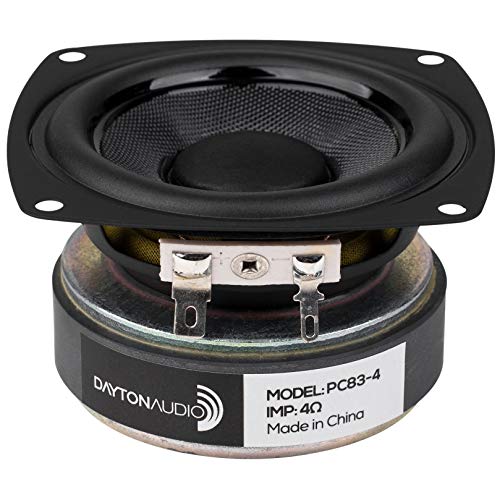
The Dayton Audio PC83-4 is a compact 3″ full-range driver designed for simple, space-constrained installations. Its copper cap helps control inductance and extend high-frequency response, while the poly damped woven glass fiber cone supports smooth suspension and reduced break-up. This driver is intended for straightforward, budget-conscious builds where a single, small speaker can cover most midrange and treble duties in a basic system. It provides a clear, coherent sound stage in small enclosures or door panels, especially when paired with a suitable crossover or amplifier.
Pros: Very compact, easy to integrate, good high-frequency extension for its size. Cons: Limited bass output; best used as a midrange or full-range in compact, simple systems.
DS18 PRO-HY6.4B 6.5″ Hybrid Mid-Range
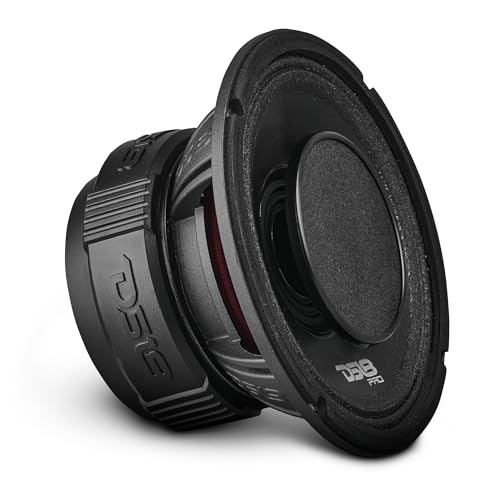
The DS18 PRO-HY6.4B is a hybrid 6.5″ midrange speaker that combines a high-wattage midrange with a built-in compression driver horn? This model is designed to deliver a broader frequency response with a strong high-end presence, rated at 225 W RMS and 450 W peak, with 4-ohm impedance. The integrated high-frequency driver horn expands the upper range, providing a more energetic sound stage especially in car interiors where space limits acoustic dispersion. The design aims to deliver loud, full-range performance suitable for enthusiasts seeking a strong midrange plus crisp highs in one compact package.
Pros: Excellent high-frequency extension, strong overall output for its size. Cons: Higher power requirements may necessitate careful head unit or amplifier matching and proper crossover design to avoid harshness.
Buying Guide: Key Considerations For Mid Range Drivers
- Impedance and power handling: Most car audio systems use 4 or 8-ohm drivers. Choose a driver that matches your head unit’s or amplifier’s output and ensure the RMS rating suits your intended listening level to avoid distortion or overheating.
- Frequency response: Midrange drivers typically cover from about 400 Hz up to 7 kHz or higher. If you want more vocal clarity and presence in songs with prominent vocals, look for drivers with a clean response in the 500 Hz – 4 kHz range and smooth transition to higher frequencies via a crossover or built-in horn.
- Sensitivity and efficiency: Higher sensitivity translates to more perceived loudness with less power. In stock vehicles with limited amplification, choosing a driver with good sensitivity helps you achieve better output without upgrading the amp.
- Size and mounting depth: Cars have varying door depths and mounting spaces. Check the driver’s mounting depth and frame size to ensure a proper fit without modifications. Some models offer slim profiles or integrated mounting hardware for easier installs.
- Materials and construction: Cone material (poly, paper, Kevlar-loaded), voice coil quality, and a rigid frame affect detail, durability, and heat management. Higher-end midrange drivers may use better cones and vented pole pieces to minimize power compression.
- Enclosure and crossover considerations: For best results, combine midrange drivers with a suitable crossover and, if needed, a dedicated tweeter or full-range setup. Proper crossover points prevent harsh highs or muddiness in the midrange.
- Installation goals: If you’re upgrading factory speakers, aim for drivers that can integrate with existing wiring and mounting locations with minimal modification. Some come with grilles or hardware that simplify installation and preserve a factory look.
- Sound goals and listening style: For vocals and instruments in rock, pop, and hip-hop, prioritize clarity and efficiency. For classical or jazz, a balanced, detailed midrange with minimal distortion at higher volumes is desirable.
In summary, the five mid range drivers highlighted here offer a balance of efficiency, build quality, and install convenience for most mid-range sound upgrades. When selecting, prioritize impedance compatibility with your head unit, power handling that matches your amplifier or head unit, and the physical fit inside your vehicle. A well-chosen midrange can dramatically improve vocal clarity, instrument detail, and the overall realism of car audio without necessitating major component upgrades.