Finding the right men’s trail shoe involves balancing grip, support, protection, and comfort across varied terrain. The following selections span lightweight athletes to rugged hikers, highlighting shoes built for dirt paths, rocky trails, and mixed surfaces. Each option focuses on stability, traction, and durability to help you stay confident from trailhead to summit.
| Product | Brand | Key Feature |
|---|---|---|
| New Balance Men’s 410 V8 Trail Running Shoe | New Balance | Versatile AT Tread outsole for on- and off-road traction |
| Merrell Men’s Moab 3 Hiking Shoe | Merrell | Pigskin leather/mixed upper with debris-blocking features |
| Salomon Men’s Speedcross 6 | Salomon | Unparalleled grip with precise fit |
| Saucony Men’s Excursion TR15 | Saucony | Rugged carbon-rubber outsole and Versarun cushioning |
| Adidas Men’s Terrex Anylander | adidas | Recycled materials, durable reinforced upper |
Across these options, you’ll find models that excel in trail responsiveness, foot protection, and ground feel. Each product section below provides a concise overview with notable features and practical considerations to help you compare at a glance.
New Balance 410 V8 Trail Running Shoe

The New Balance 410 V8 delivers versatility for mixed terrain with an AT Tread outsole designed to provide reliable traction on both damp trails and hard-packed paths. A synthetic upper keeps the shoe lightweight, while the Soft BIO Foam midsole aims to cushion landings for daily training or longer runs. The design emphasizes a balanced ride with predictable grip, making it a practical option for runners who encounter varied surfaces during week-day workouts or weekend adventures.
Merrell Moab 3 Hiking Shoe

The Merrell Moab 3 combines a pigskin leather and mesh upper with practical protection features for long days on the trail. Debris-blocking bells and a reliable fit help keep irritants out, while recycled laces and webbing reflect a durable, eco-conscious build. The Moab 3 is a solid option for hikers seeking comfort, stability, and shielded performance on rocky or root-littered trails, with a focus on all-day wearability.
Salomon Speedcross 6

The Salomon Speedcross 6 emphasizes grip and a precise, comfortable fit for aggressive trail conditions. With a design centered on traction and trail feel, this model suits runners who encounter soft, muddy surfaces or technical descents. The Speedcross 6 balances responsive cushioning with a snug forefoot, helping maintain control on uneven terrain while minimizing slip risk on slick sections.
Saucony Excursion TR15
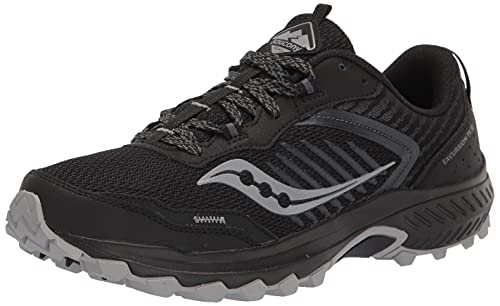
The Saucony Excursion TR15 is built for flexible, rugged performance with a carbon-rubber outsole for rocky footing and a Versarun midsole for cushioned comfort. Its trail-specific mesh and supportive overlays help lock the foot in place while guarding against debris—making it well-suited for longer runs on mixed terrain or weekend hikes where terrain varies from smooth paths to uneven tread.
Adidas Terrex Anylander

The Adidas Terrex Anylander blends a lightweight profile with durable, reinforced upper construction and a midsole drop that supports a comfortable stride on varied surfaces. Partially crafted with recycled materials, this shoe aims to balance performance with sustainability. The reinforced toe cap adds protection against rocks, while a flexible upper fosters a secure fit during fast-paced trail runs or casual off-road hikes.
Buying Guide: Key Considerations for Choosing a Men’s Trail Shoe
- Terrain and traction: Assess whether you primarily encounter dry dirt, loose gravel, muddy trails, or rocky ascents. Look for lugs, grip patterns, and outsole compounds suited to those conditions.
- Protection and durability: Consider toe protection, upper materials, and debris-blocking features for protection against rocks, roots, and weather exposure.
- Fit and comfort: Check for a secure midfoot lockdown, adequate toe box space, and cushioning that matches your typical mileage. A breathable upper helps prevent overheating on long runs.
- Support and stability: If you overpronate or require extra stability, seek models with supportive overlays, a stable chassis, or a rock plate where available.
- Weight vs. cushioning: Lightweight shoes favor speed and agility, while more cushioning benefits longer distances and rough terrain. Decide based on typical use and comfort preference.
- Durability and sustainability: Consider materials (synthetic uppers, leather, recycled components) and build quality for long-term wear in varied weather.
- Maintenance: Some materials dry faster and resist water better; others benefit from occasional cleaning to preserve traction and fit.
When selecting a men’s trail shoe, align the model with your most frequent terrain, the distance you run or hike, and your preferred balance of cushioning and responsiveness. The five featured options provide a spectrum from cushioned all-terrain models to nimble, grip-focused designs, enabling you to tailor a choice to your trail routine.