Finding the right marathon training watch can help you monitor pace, distance, heart rate, and recovery as you prepare for race day. This guide highlights five reliable options designed for road and trail runners, balancing GPS accuracy, battery life, and smart coaching features. Each product section includes key specs and how it supports marathon training, from daily suggested workouts to race-day pacing guidance. The buying guide below compares display quality, battery longevity, and recovery metrics to help you choose the best fit for your training style.
| Product | Brand | Main Benefit |
|---|---|---|
| Garmin Forerunner 55 | Garmin | Beginner-friendly GPS running with daily workouts |
| Garmin Forerunner 165 | Garmin | AMOLED display with personalized training and recovery insights |
| Garmin Forerunner 265 | Garmin | Advanced metrics, long battery life, robust training Readiness |
| Timex Ironman Classic 30 | Timex | Rugged, reliable daily timing with essential triathlon-ready features |
| Marathon Timex TW5K84800 | Timex | Mid-size digital watch with multiple time zones and stopwatch |
Garmin Forerunner 55, GPS Running Watch
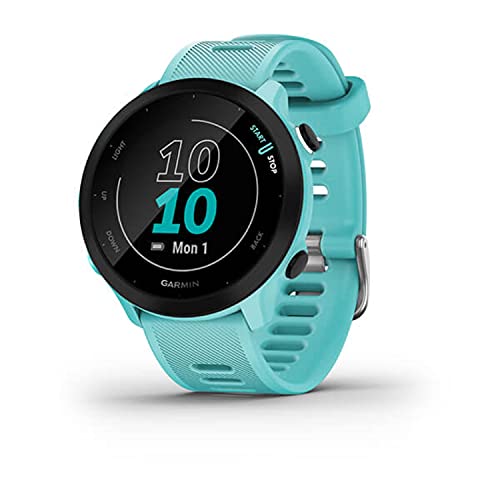
The Garmin Forerunner 55 offers user-friendly heart-rate monitoring at the wrist and GPS-based distance, pace, and location tracking. It provides up to two weeks of battery life in smartwatch mode and around 20 hours in GPS mode, making it a strong option for longer training cycles with fewer charges. A PacePro feature helps plan race-day pacing on a chosen course or distance. While not intended as a medical device, it provides actionable insights to structure easy runs, workouts, and speed sessions for marathon training.
Garmin Forerunner 165, Running Smartwatch

The Forerunner 165 brings a bright AMOLED touchscreen display with traditional button controls, delivering pace and distance tracking plus wrist-based heart rate. It offers up to 11 days in smartwatch mode and up to 19 hours in GPS mode. The watch supports personalized daily suggested workouts, Garmin Coach, and race-adaptive training plans, which adapt to your performance and recovery to help you reach specific marathon goals. Its lightweight 43 mm design makes it comfortable for daily wear and long training sessions.
Garmin Forerunner 265 Running Smartwatch

The Forerunner 265 features a brilliant AMOLED display and a lightweight 46 mm body, designed for marathon training that benefits from clear data visualization. It provides up to 13 days in smartwatch mode and up to 20 hours in GPS mode. This model includes morning sleep summary, HRV status, recovery insights, and training readiness indicators, offering a comprehensive view of how your body recovers between long runs and workouts. It pairs with coaching plans and training metrics that adapt to performance over time.
Timex Ironman Triathlon Classic 30
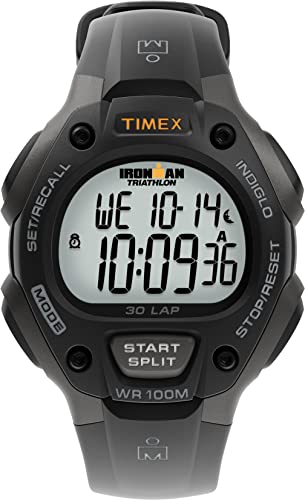
The Timex Ironman Classic 30 emphasizes durability and straightforward functionality. It features a 100-hour chronograph with 30-lap memory, a 24-hour countdown timer, multiple time zones, and an INDIGLO backlit display for easy readability during early morning or evening runs. While not a feature-heavy smartwatch, it provides essential timing and interval capabilities suitable for consistent marathon training routines without distraction.
Marathon Timex TW5K84800 Digital Watch

The Marathon Timex TW5K84800 offers a mid-size digital display with a black/blue resin strap and essential marathon-ready features. It includes a 24-hour stopwatch, dual time zones, daily alarm, and calendar functions. Its straightforward interface is designed for runners who prefer reliable timing tools without extensive smart features, making it a practical companion for tempo runs and long-distance training where simplicity matters.
Buying Guide: Key Purchase Considerations
- Display and readability: AMOLED displays (Garmin Forerunner 165 and 265) provide vivid metrics but can consume more battery. Legacy displays (Forerunner 55) offer solid visibility with longer battery life.
- Battery life: If you log long runs or multiple training days without charging, prioritize models offering 10+ days in smartwatch mode or extended GPS endurance (18–20 hours or more).
- Training features: Look for daily suggested workouts, Garmin Coach, race-adaptive plans, and recovery metrics to optimize long-run progression and taper strategies.
- GPS accuracy and pace tools: Accurate distance and pace tracking are essential for marathon pacing. Pace guidance on selected courses helps with consistent splits.
- Durability and comfort: Lightweight, breathable bands and rugged casings suit daily wear and early morning sessions. Water resistance is a plus for all-weather training.
- Display controls: Touchscreen plus physical buttons offer versatile navigation; buttons can be advantageous when gloves are worn or during rainy runs.
- Data ecosystem: Ensure compatibility with your preferred platform (Garmin Connect, Garmin Coach, or third-party apps) for a seamless training log.
- Price-to-feature balance: For entry-level training, the Forerunner 55 provides solid essentials. For advanced metrics and coaching, the Forerunner 165/265 line adds depth.
- Multisport and additional modes: For triathlon or cross-training, features like lap memory and interval timers simplify structured workouts.
When selecting a marathon training watch, consider how you train most often (speed work, long runs, or easy miles), how you prefer to view metrics, and how often you want coaching guidance. This balance between display clarity, battery life, and coaching depth will determine which model delivers the best return on investment for your marathon journey.