Indoor smart trainers offer a range of realism, connectivity, and power metrics for cyclists training at home. This guide reviews five top models, highlighting ride feel, power accuracy, connectivity, and setup practicality to help you pick the right trainer for Zwift, Rouvue, or other training apps.
Summary of selected products:
- Wahoo KICKR V6 Smart Indoor Trainer — Advanced ride feel with AXIS feet and 2.4 GHz Wi‑Fi.
- ThinkRider X2Max Smart Bike Trainer — 18% tilt resistance, dual BLE/ANT+ compatibility.
- Garmin Tacx Neo 2T Smart Trainer — Durable build with magnetic resistance and foldable design.
- Saris Fluid2 Indoor Bike Trainer — Fluid resistance with solid USA-made build and foldability.
- Wahoo KICKR Move Smart Indoor Trainer — Dual-axis motion for a more natural ride feel.
Wahoo KICKR V6 Smart Indoor Trainer

The Wahoo KICKR V6 combines robust Wi‑Fi connectivity with a high-inertia flywheel and AXIS feet to deliver a compelling ride feel. Its 2.4 GHz Wi‑Fi transmission supports real-time ride data transfer to compatible devices, ensuring you can train with Zwift, TrainerRoad, or other apps without delays. The KICKR AXIS feet add lateral movement, simulating natural terrain shifts and improving overall stability during hard efforts. This model is ideal for serious cyclists seeking a premium indoor experience with consistent data streaming.
ThinkRider X2Max Smart Bike Trainer

The ThinkRider X2Max delivers strong compatibility with BLE and ANT+ dual-mode protocols, making it easy to pair with popular apps like Zwift. It offers a powerful power output up to 2000W with an accuracy of ±2%, and an intelligent 18% tilt resistance that automatically mirrors incline changes from mapped courses. This combination provides a realistic indoor climbing experience and precise data for training programs. The unit’s quiet operation and robust build make it suitable for apartment setups and home gyms alike.
Garmin Tacx Neo 2T Smart Trainer

The Garmin Tacx Neo 2T is built with a sturdy metal and plastic construction, offering magnetic resistance with 32 neodymium magnets. It is foldable for compact storage, and its smart capabilities integrate with leading training apps to deliver interactive workouts. Users benefit from smooth accelerations and high compatibility with various software ecosystems, making it a versatile choice for riders who value portability without sacrificing performance.
Saris Fluid2 Indoor Bike Trainer
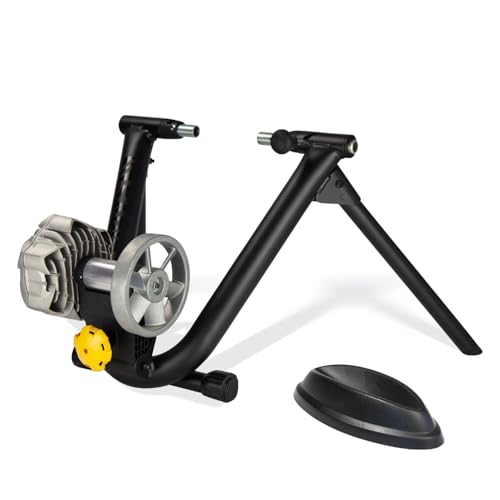
The Saris Fluid2 provides a reliable fluid resistance system with a machined aluminum roller and steel frame. It is designed for road and mountain bikes and is compatible with Zwift for virtual training sessions. Its foldable design helps with storage, and the build quality reflects durability for regular indoor training. The fluid resistance offers progressive feel, increasing resistance as you apply more power, which is ideal for endurance workouts.
Wahoo KICKR Move Smart Indoor Trainer

The KICKR MOVE introduces built-in dual-axis movement and the familiar KICKR flywheel, delivering a more natural, six-degree-of-freedom ride feel as you pedal and surge. Its ability to move fore and aft reduces fatigue and enhances comfort during long workouts. This trainer is designed for riders who want maximum realism to replicate outdoor riding dynamics while staying indoors.
Buying Guide: Key Purchase Considerations
- Ride feel and motion: If you want the most outdoors-like sensation, prioritize models with dual-axis motion and a heavy flywheel. AXIS feet and direct drive capabilities often contribute to a smoother, more realistic experience.
- Power and resistance: Look for wattage ranges and precision—especially if you train with power meters or aim for structured workouts. Higher peak power and tight error margins improve training fidelity.
- Connectivity: Ensure compatibility with your preferred apps (Zwift, TrainerRoad, MyWhoosh, etc.) and check support for BLE, ANT+, or dual-mode connections. Stable Wi‑Fi connectivity reduces dropouts during workouts.
- Foldability and space: If you have limited space, consider models that fold or compact easily. Weight and footprint influence setup time and storage convenience.
- Durability and materials: Metal frames and robust rollers contribute to longevity. Foldable designs should still feel sturdy during intense efforts.
- Noise level: Quieter units are better for apartments or late-night sessions. Brushless motors and fluid resistance tend to reduce noise compared to older magnetic systems.
- Self-contained features: Some trainers offer self-power generation, built-in displays, or automatic incline simulation. Consider whether these extras align with your training style and power setup.
- Software ecosystem: If you rely on specific apps or training programs, verify that the trainer integrates smoothly and offers timely firmware updates for compatibility.
When choosing, compare the core trade-offs: realism and power accuracy versus price and space. Direct-drive models usually deliver the most accurate power feedback and quiet operation, while wheel-on trainers may be more budget-friendly and easier to set up. Consider your indoor training goals, apartment rules, and whether you prioritize ride feel, app compatibility, or compact storage.