Golf GPS devices help players of all levels make smarter club selections, avoid hazards, and speed up pre-round planning. This guide reviews five reliable options, spanning pocket-friendly watches to feature-rich handhelds. Each product offers preloaded courses, distance readouts, and course-hazard information to support consistent shot decisions. Use the buying guide below to compare display type, battery life, course coverage, and extra features like slope, voice guidance, or launch data to pick the best GPS golf accessory for your game.
| Product | Brand | Key Features |
|---|---|---|
| Garmin Approach S12 | Garmin | 42k+ courses, GPS watch, sunlight-readable display |
| Garmin Approach S44 | Garmin | AMOLED display, hazard view, long battery life |
| Garmin Approach G80 | Garmin | Integrated launch monitor, preloaded maps |
| Blue Tees Golf Player+ | Blue Tees Golf | Touch screen, 40k+ courses, dynamic hazards, score tracking |
| GOLFBUDDY Voice 2S+ | Golf Buddy | Talking GPS, 40k+ courses, long battery |
Garmin Approach S12, Easy-to-Use GPS Golf Watch
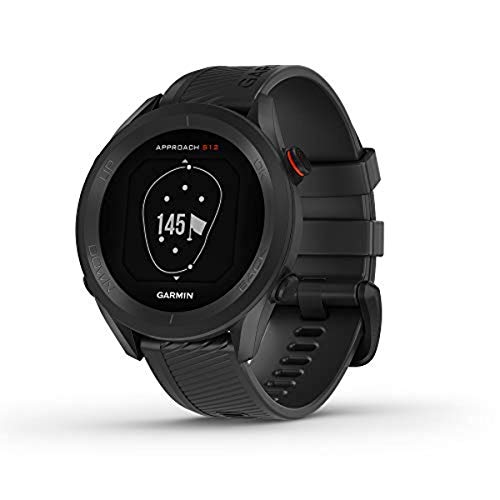
The Garmin Approach S12 is a straightforward GPS golf watch designed for players who prefer wrist-based yardages. It preloads more than 42,000 courses, ensuring global coverage. Its round-focused interface presents front, center, and back distances with a clear, sunlight-readable display. Battery life reaches up to 30 hours in GPS mode, supporting multi-round outings without frequent recharges. The watch’s compact design makes it easy to wear through the entire round, with quick-access features that simplify course navigation and shot planning.
Garmin Approach S44, Essential Golf GPS Smartwatch

The Approach S44 combines an AMOLED display with advanced course data for quick reads during play. With hazard view and precise distances to the front, middle, and back of greens, it supports smarter club selection in real time. This model emphasizes clarity and aesthetics, delivering a brighter screen and a responsive interface for faster decision-making on busy greens. It pairs with optional Garmin club trackers for added shot-tracking capabilities, expanding its role beyond yardage alone.
Garmin Approach G80, All-in-One GPS Handheld

The Garmin G80 integrates a premium GPS handheld with an on-board launch monitor. It logs club head speed, ball speed, smash factor, swing tempo, and estimated distance, delivering a data-rich experience for serious players. With preloaded color course maps for more than 41,000 courses, this device supports comprehensive on-course analysis. The 3.5-inch touchscreen enables intuitive navigation, and the compact form makes it a portable alternative to bulkier handheld devices.
MILESEEY GenePro G1 Touchscreen GPS
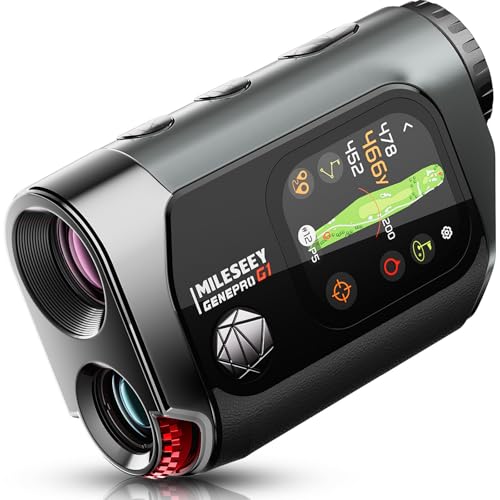
The MiLESEEY GenePro G1 blends a color touchscreen with GPS rangefinding and slope data, offering more than 43,000 preloaded courses. The 2.13-inch AMOLED display provides high visibility in various lighting conditions. Real-time readings to the front, center, and back of greens help players optimize approach angles and club selection, while a responsive interface supports quick adjustments between holes. The device emphasizes ease of use and consistent yardage accuracy for daily rounds.
GOLFBUDDY Voice 2S+ Talking GPS

The Golf Buddy Voice 2S+ is a talking GPS rangefinder that speaks distances to the front, center, and back of the green. It supports clip-on convenience for hats or belts and offers adjustable audio guidance to fit the user’s preference. With up to 18 hours of battery life in GPS mode, the device sustains long rounds without interruption. It preloads around 40,000 courses globally, ensuring broad course coverage and reliable yardages during travel or regional play.
Buying Guide: Key Purchase Considerations
Display and readability: Look for sunlight-readable screens, especially for outdoor play in bright daylight. AMOLED displays deliver vibrant visuals, while standard LCDs are often more battery-friendly. If you prefer hands-free use, a wearable GPS or voice-guided model can reduce distractions.
Preloaded course coverage: Ensure the device includes your typical courses and regions. Most options advertise 40,000+ courses worldwide, but verify that critical courses near you are included. Regular updates help maintain accuracy and expand coverage over time.
Distance data and features: Decide which metrics matter most—front/center/back distances, hazard warnings, slope, or launch data. Some devices offer dynamic hazard views (bunkers, water hazards) and shot data to help with club selection and strategy.
Battery life and form factor: Round-length scenarios influence your choice. A wristwatch is convenient for players who dislike carrying devices, while handhelds or clip-on units can offer larger displays and more detailed data. Check battery life for your typical round length and charging convenience.
Additional capabilities: Some models pair with club trackers or launch monitors, provide slope-adjusted distance readings, or offer audible guidance. Think about whether you value on-device scorekeeping, integrated shot tracking, or data export for post-round analysis.
Ease of use and durability: A simple interface reduces on-course distractions. Weather and water resistance (IP ratings) matter for outdoor durability. Consider whether the device can withstand occasional drops or exposure to rain and splashes during play.
Price vs. value: Higher-end watches and handhelds offer more data and polish, but a mid-range model often delivers the core GPS yardage reliability many casual players want. Balance feature needs with budget and intended usage such as daily practice vs. weekend rounds.
Choosing the right GPS device depends on how you play, where you play, and what way you prefer to receive information on the course. Whether you want a compact watch, a feature-rich handheld, or a voice-guided assistant, the options above cover a spectrum of styles while delivering reliable yardage, hazard awareness, and course data to support your scoring improvement.