Composite mountain bike pedals pair lightweight construction with durable materials to deliver reliable grip and smooth pedaling on rugged trails. This guide compares top-rated options that balance platform size, pin configuration, and bearing quality to help riders choose pedals that reduce fatigue and pedal strikes while preserving control in challenging terrain. Below, you’ll find five standout models across several brands, each with notable grip, durability, and value.
| Product | Brand | Key Benefit |
|---|---|---|
| OneUp Components Composite Pedals | OneUp Components | Large platform, replaceable pins, ultra-thin convex profile |
| FIFTY-FIFTY Mountain Bike Pedals (Gum) | FIFTY-FIFTY | Ultra-thin, wide platform, strong nylon composite |
| ROCKBROS Lightweight Mountain Bike Pedals | ROCKBROS | Nylon fiber surface, wide platform, durable |
| Crankbrothers Stamp 1 Gen 2 | Crankbrothers | Redesigned concave profile, robust pins, versatile use |
| ROCKBROS Mountain Bike Pedals (Bearing) | ROCKBROS | Sealed bearings, wide platform, anti-skid spikes |
These selections emphasize flat-pedal versatility for trail enthusiasts, commuters seeking grip in diverse weather, and riders who value a forgiving, easy-to-clip-free platform. Each option is designed to minimize pedal strikes with a low-profile or concave shape and offers multiple colorways or materials to suit different bike builds. The list below presents a quick overview of each product’s strengths, followed by deeper details for informed comparison.
OneUp Composite Pedals: Lightweight and Grippy

OneUp Components offers a bombproof, grippy pedal with a large 115x105mm platform. The pedals use ten replaceable pins per side and a subtle convex shape that sits naturally under the foot’s arch, improving traction and comfort. The ultra-thin profile reduces pedal strikes and helps clearance on rough trails. Availability in multiple colors makes it easy to match bike aesthetics. The design emphasizes durability and value, making these a popular choice for riders seeking reliable flat-pedal performance on aggressive MTB segments.
FIFTY-FIFTY Gum Pedals: Ultra-Thin, High Grip

FIFTY-FIFTY’s Nylon Composite pedals stand out for their ultra-thin 0.7 inch profile and a broad 106×104 mm platform. They feature nine replaceable steel pins per side to provide dependable grip, with high-strength Cr-Mo spindles for resilience in muddy or rocky conditions. The combination of a wide, grippy platform and reduced thickness minimizes pedal strikes and keeps your feet planted on tough climbs or fast descents.
ROCKBROS Lightweight Pedals: Durable and Wide

ROCKBROS emphasizes a sturdy nylon fiber surface with a high-strength Cr-Mo spindle. The wide 4.1-inch platform combined with an ultralight 0.8 lb per pair design delivers comfort on long rides and stability on rough terrains. Anti-skid nails on each side offer reliable grip even in wet or muddy conditions, and the textured surface helps keep your foot secure when the trail gets technical.
Crankbrothers Stamp 1 Gen 2: Versatile and Grippy

Stamp 1 Gen 2 pedals feature a redesigned concave profile for improved grip and stability, supported by a robust internal bushing and spindle design. Ten one-piece pins per side provide reliable traction, and the reinforced composite body keeps weight modest. The pedals are offered in multiple sizes and have a strong 5-year warranty, reflecting Crankbrothers’ emphasis on durability and rider confidence across MTB, BMX, or commuting applications.
ROCKBROS Bearing Pedals: Sealed, Wide Platform
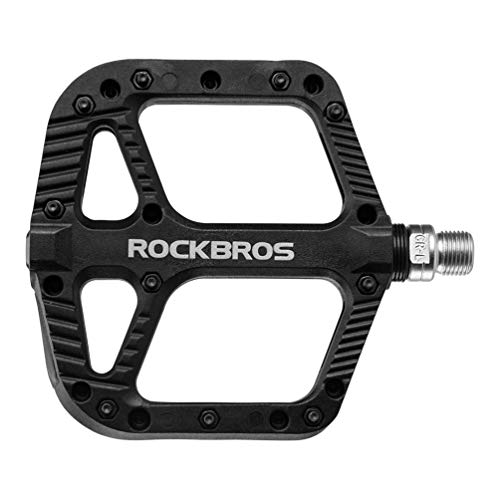
These ROCKBROS pedals combine a wide 101 mm platform with sealed bearings to resist water and dust. The aluminum CNC construction provides a durable, lightweight feel with a secure grip thanks to stainless steel anti-skid spikes on both sides. The asymmetric design helps keep feet planted and reduces the likelihood of slips during fast, technical sections of a ride.
Buying Guide: Key Considerations When Choosing Composite MTB Pedals
- Platform size and shape
- Grip and pins: number, placement, and replaceability
- Weight and profile: how much clearance you need to avoid strikes
- Durability: material (nylon composite, aluminum), spindle quality, bearings
- Weight distribution and balance for your riding style
- Maintenance: ease of replacing pins, cleaning, and lubricating bearings
- Compatibility: pedal spindle size (commonly 9/16″) and color/style with your shoes
For trail riders, a larger platform with good grip reduces foot movement and improves control on rough sections. For climbers, a thinner profile lowers the pedal’s perceived height and helps minimize pedal strikes on rocks and stumps. All listed options emphasize a balance of grip, durability, and reasonable weight, with variants in pin configurations and platform size to suit different MTBs and riding environments.
When evaluating these pedals, consider how often you ride in wet or muddy conditions, your typical shoe type, and whether you prefer more grip with replaceable pins or a lighter footprint with fewer components. The models above represent a cross-section of well-regarded composite MTB pedals that address common rider needs including durability, grip, and platform comfort on long or technical rides.
Additional Factors to Compare
- Color and aesthetic compatibility with your bike
- Warranty and customer support from the brand
- Replaceable components availability (pins, bearings)
- Pedal lifetime under different terrains (rocky trails vs. smooth dirt)
- Accessibility of installation tools and instructions