Finding a reliable dive computer without breaking the bank is a top priority for many divers. The following selections emphasize affordability, solid features, and clear displays to help you plan and monitor dives with confidence. This guide compares five budget-friendly options, highlighting what you get at each price point and how they fit different diving styles—from casual recreational dives to more technique-driven planning.
| Product | Brand | Key Benefit | Display | Water Rating |
|---|---|---|---|---|
| Mares Puck Pro EZ Wrist Underwater Dive Computer | Mares | Bright screen with versatile gas options | High-contrast display | Waterproof |
| Cressi Leonardo 2.0 | Cressi | User-friendly single-button navigation | HD backlit screen | Waterproof |
| SUUNTO Zoop Novo | SUUNTO | Multi-mode support and alarms | Clear readability | Waterproof |
| SUNROAD D3 Scuba Diving Computer Watch | SUNROAD | Multimode with oxygen mix programming | Digital display with compass | Waterproof |
| Garmin Descent X30 | Garmin | Compact, long battery life, surface GPS | 2.4″ color display | Waterproof |
Mares Puck Pro EZ Wrist Underwater Dive Computer

The Mares Puck Pro EZ Wrist Dive Computer emphasizes clear visibility, showing depth, time, temperature, and no-deco limits on a bright display. It supports single-gas Nitrox (21%–50%) and uses a robust algorithm to provide reliable decompression calculations. Its compact form makes it a practical choice for recreational divers who want straightforward operation and dependable data at a reasonable price.
Cressi Leonardo 2.0 Dive Computer

The Cressi Leonardo 2.0 offers a user-friendly interface with a single-button navigation system for easy switching between Air, Nitrox, and Gauge modes. It allows FO2 and PO2 adjustments for customized dive planning and includes a CNS oxygen toxicity indicator for safety awareness. The device targets divers who value simplicity without sacrificing essential dive data and safety alarms.
SUUNTO Zoop Novo Wrist Scuba Diving Computer

The Suunto Zoop Novo provides multiple operating modes—air, nitrox, gauge, and freedom—with configurable oxygen mixes. It supports both Imperial and metric units and includes altitude-aware settings and decompression stop data. Audible alarms help divers stay informed, making it a practical entry-level option.
SUNROAD D3 Scuba Diving Computer Watch

The SUNROAD D3 is a versatile dive computer watch featuring multiple modes, including air and Nitrox, gauge diving, and free diving. It supports decompression and CNS alarms, includes a digital compass, and is programmable for oxygen mixtures from 21% to 50%. It suits divers who want a compact, watch-style device with broad dive-mode support.
Garmin Descent X30
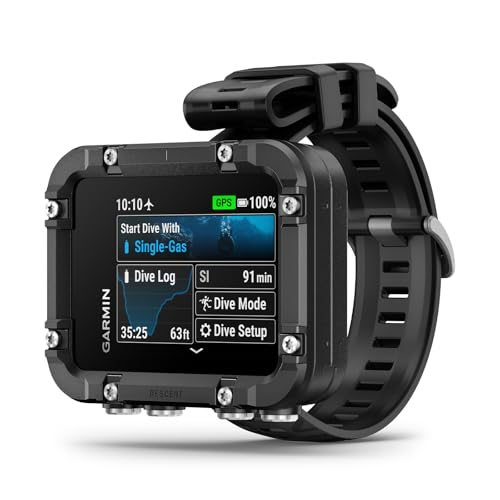
The Garmin Descent X30 offers a vibrant 2.4-inch color display and GPS surface tracking, with up to 30 hours of battery life. It supports dive profiles for single, multi-gas, and trimix configurations, and its large screen and customizable data fields help divers view critical information at a glance. It emphasizes durability with recycled materials and a robust feature set for tech-focused divers.
Buying Guide: Key Purchase Considerations For Budget Dive Computers
- Display and readability: Look for high-contrast, backlit screens for easy reading underwater, especially in low-light conditions.
- Gas options: Ensure the device supports the gas mixes you plan to use, typically Air, Nitrox (with adjustable PO2), and sometimes Gauge mode for depth-only planning.
- Decompression model: Most budget models use established models like Bühlmann; verify the algorithm and conservatism options to suit your training and risk tolerance.
- Alarms and safety: Audible alarms for depth, ascent rate, and CNS/oxygen toxicity are essential for safety and awareness during dives.
- Durability and water resistance: Check water ingress ratings (ATM or meters) and build quality, especially if you dive in cold or harsh environments.
- Interface and usability: A straightforward navigation system, whether single-button or multi-button, helps reduce complexity on dive days.
- Size, weight, and comfort: Consider the form factor—watch-style vs wrist-mounted—and how it fits with your suit thickness and wrist size.
- Software updates and support: Brands that offer ongoing firmware updates provide access to improved algorithms and new features over time.
- Accessories and integration: Some devices pair with dive computers, transceivers, or smartphone apps for logging and planning; evaluate what you need.
- Budget versus features: Balance essential safety features with desired conveniences (GPS, large displays, multiple gas options) within your price range.